thequietcost.substack.com · Steven · September 7, 2026
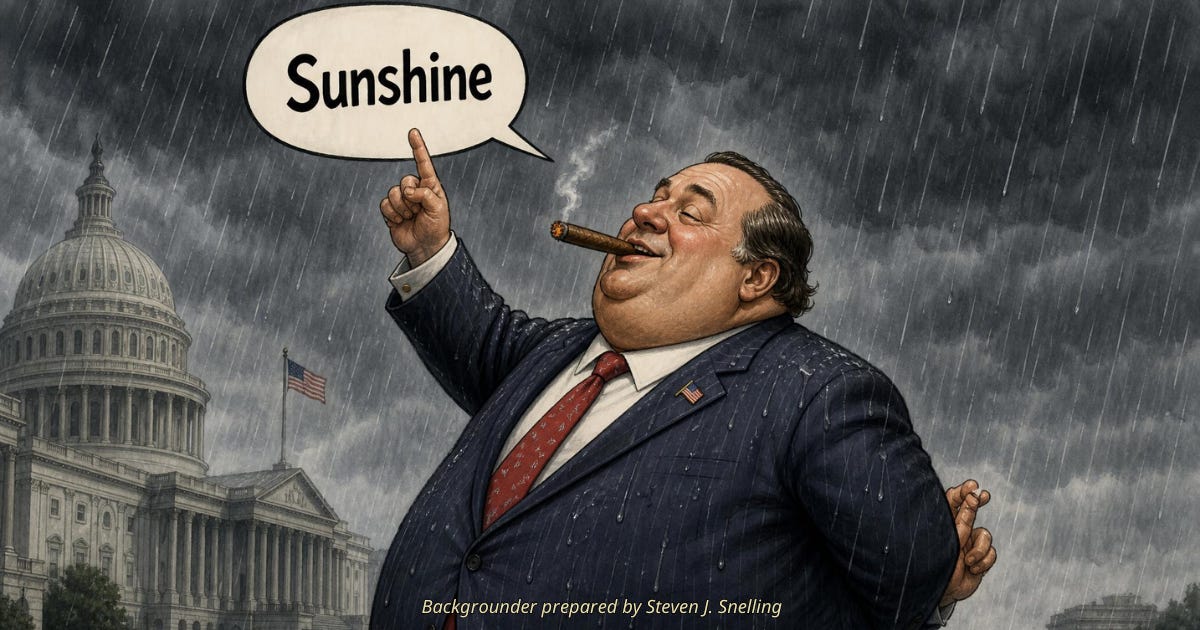
The Tax Bill You Didn’t Vote For - by Steven
# The Tax Bill You Didn’t Vote For
Steven
Sep 07, 2026
Over the past decade, New Hampshire has shifted roughly $3 billion in costs onto local property taxpayers — and for seven of those eleven years, one party held complete control of the governorship and both legislative chambers while it happened. If you’ve voted for that party without checking what it actually did with that power, what follows is the bill you didn’t know you were signing.
> Most people don’t read legislative bills. They don’t track roll calls, follow committee hearings, or parse the difference between “Ought to Pass” and “Ought to Pass as Amended.” They vote for a person, or more honestly, for a letter next to a name, and then they trust. That trust isn’t naive — it’s how representative government is supposed to function. You elect someone to do the close reading so you don’t have to, and you hold them accountable at the next election if it turns out badly. If you live in Charlestown, Newport, or Unity, that trust has a name attached to it and a recent, specific example — explained in full further down — of what happens when the person you’re trusting doesn’t tell you the truth. For our neighbors elsewhere in the state, the pattern below is still yours; it just doesn’t yet have your representative’s name on it.
The problem is what happens when “holding them accountable” never actually occurs, because most voters never learn what happened in between. This is the story of what happened in between, in New Hampshire, over the last decade — and of exactly who was in the room, with the votes, the whole time.
Start with the number that matters most: $3 billion.
That’s the figure New Hampshire Municipal Association’s own analysis puts on what the state has shifted onto local property taxpayers over the eleven years from 2015 to 2025 — not our estimate, but a memo from Jack Wozmak, the Cheshire County Treasurer, published through NHMA itself. The memo defines “downshifting” precisely: any state policy action that reduces state funding or increases local mandates, requiring local governments to raise property taxes to cover the difference. It breaks the $3 billion into three pieces. Roughly $2.1 billion of it landed on school districts — driven by reduced state education aid, special education underfunding, charter tuition costs, and other mandates. About $600 million landed on municipalities, through the elimination of state contributions to municipal retirement costs, reduced municipal aid and meals-and-rooms tax distributions, and shortfalls in highway and public safety funding. Roughly $300 million landed on counties, mostly through Medicaid nursing home reimbursement shortfalls and expanded county human-services obligations.
Here’s the piece that should stop you: without that $3 billion downshift, the total statewide property-tax levy (your property tax bill) today would be lower than it was roughly a decade ago. Local spending increases — schools, towns, and counties combined — were not large enough on their own to explain a decade of rising tax bills. Whatever you’ve been told about runaway local spending, the math says otherwise. The growth came from Concord, not from your town meeting.
Now ask the question this whole series keeps returning to: who was actually in Concord while this happened?
Here’s the answer, year by year, and it’s more precise than “the legislature did it” — because for four of those eleven years, “the legislature” wasn’t unified at all.
2015 and 2016: Governor Maggie Hassan, a Democrat, sat across from a Republican-controlled House and Senate. Divided government.
2017 and 2018: Governor Chris Sununu, a Republican, took office alongside a Republican House and a Republican Senate. Full Republican control of all three levers of state power — what political scientists call a trifecta.
2019 and 2020: Sununu remained governor, but voters flipped both the House and Senate to Democratic control. Divided government again, this time in the other direction.
2021 and 2022: Republicans retook both chambers. Sununu remained governor. Full trifecta restored.
2023 and 2024: Same alignment. Full Republican trifecta continued.
2025 and 2026: Kelly Ayotte succeeded Sununu as governor, a Republican succeeding a Republican, alongside a Republican House and a Senate Republicans expanded to a 16–8 supermajority. Full trifecta, and a stronger one than before — though only 2025 falls inside the eleven-year window this analysis covers, since 2026 is still underway.
Add it up, and the pattern is unmistakable: Republicans held complete control of the governorship and both legislative chambers for seven of those eleven years — roughly two-thirds of the entire window this downshift occurred in. And here is the detail that should end any argument about “both sides do this”: in the four years that weren’t a full Republican trifecta, not one of them was a Democratic trifecta either. Republicans held the Senate for nine of the eleven years, the House for nine of the eleven years, and the governorship for nine of the eleven years — the only chamber Democrats ever fully controlled, for two years out of eleven, was the legislature during a period when a Republican governor still sat with veto power in Concord. At no single point across this entire decade did Democrats hold every lever of state government at once. Republicans always held at least one, and usually held all three.
This is the frame that matters for understanding everything else this series has documented.
The 2011 rule letting wealthy, high-property-value towns keep their surplus Statewide Education Property Tax collections instead of redistributing them to towns like Charlestown — passed by a Republican legislative supermajority, 288 to 103 in the House that session.
The business tax rate cuts, passed session after session starting in 2015, that cost the state an estimated $795 million to $1.17 billion in forgone revenue — money that could have funded the Education Trust Fund adequacy grants Charlestown, Newport, and Unity depend on.
The full repeal of the Interest and Dividends Tax in 2025 — a tax that primarily fell on investment income held by wealthier residents — passed by the Republican legislature and signed by Gov. Ayotte.
The Hold Harmless Grant, genuinely state-funded aid, now being phased down on a schedule written into law: from $59.4 million to $47.6 million to $35.7 million, reaching zero by 2034.
HB 1300, requiring a 3/5 supermajority for Charlestown’s own voters to approve a school budget above an inflation-plus-growth formula — passed 182 Republican votes to 1 Democratic vote in the House’s final roll call, despite a “bipartisan” sponsorship label that reflected only who wrote the bill, not who actually supported it.
HB 1610, passed the same session, cutting school districts’ emergency reserve cap from 5% to 3% and canceling existing reserve authorizations — 183 of 186 Yes votes were Republican.
SB 295, removing the income cap on Education Freedom Accounts entirely — passed 190 to 178 in the House, with every single Yes vote coming from a Republican and not one Democrat in support. The program has grown from roughly $27 million when income-capped to an estimated $50 million this school year, with projections up to $102 million annually at full enrollment — money drawn from the same Education Trust Fund that’s supposed to fund adequacy aid for public school students.
And now, the effort to overturn the Claremont decisions themselves — the rulings that require the state to fund an adequate education at all — pursued by the Republican Attorney General’s office under Gov. Ayotte, openly supported by Charlestown’s own Deputy Speaker, Rep. Steven Smith, who is now seeking the Speakership itself.
There’s a sharper example worth naming on its own, because it doesn’t require anyone to have missed a floor vote — it only requires having read what a sitti