The sales milestone comes as the industry stands at a crossroads. While the commission is working on implementing regulations allowing adults to consume marijuana products in public settings, voters in November will weigh in on a ballot question to repeal the legalization of non-medical marijuana.
WBUR · WBUR · September 9, 2026
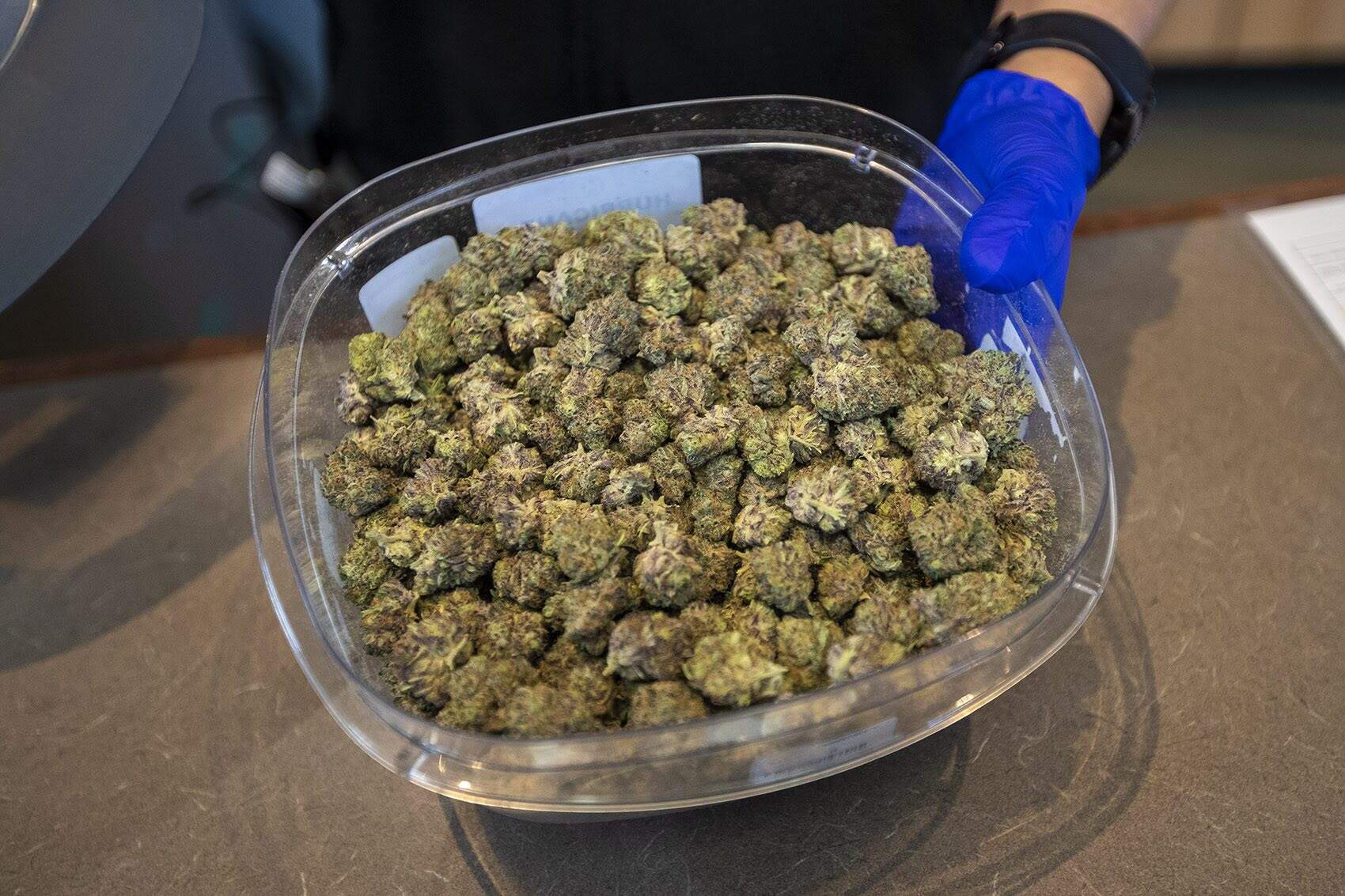
Ten years after voters legalized recreational marijuana in Massachusetts, the adult-use cannabis industry here has topped $10 billion in gross sales, a milestone that comes as the industry faces myriad changes and challenges.
"So I'd say it's a mixed bag. I don't know if we necessarily want more people using intoxicating substances, whether they're cannabis or alcohol or whatever," Cannabis Control Commissioner Anthony Wilson said in an interview with the News Service on Tuesday. "On the other hand, we've created a market that's creating jobs, that's providing a revenue to the state, and more importantly, feeding families, and is not having some of the negative, scary social impacts that people were worried about ten years ago."
Voters approved the ballot measure regulating adult-use marijuana in November 2016 and the state's first two retail stores opened around two years later. Leading up to the 2016 election, opponents – including Gov. Maura Healey, who was attorney general at the time – raised public health and safety concerns with legalizing recreational marijuana.
Adult-use retailers, which include marijuana retail stores, delivery operators and some microbusinesses, reached the $10 billion mark on Saturday, Sept. 5, according to CCC data.
The adult-use cannabis market "reliably generates" more than $1.5 billion in gross sales each year, said CCC Executive Director Travis Ahern.
"As the industry enters its next phase with new license types and operators, we look forward to continuing our mission of overseeing a safe, equitable cannabis market for Massachusetts consumers and patients," Ahern said in a statement.
While the commission is working on implementing regulations allowing adults to consume marijuana products in public settings , voters in November will weigh in on a ballot question to repeal the legalization of non-medical marijuana.
Wilson said the question "doesn't really come up at all in the building" and commissioners are focused on regulating the market that's in place.
"I would say if the ballot question passed, that would 100% affect the work that we do," Wilson said. "I'm really big on destigmatizing the industry. So, you know, if it doesn't pass, the numbers by which it doesn't pass, I think, will say more towards those efforts."
The Coalition for a Healthy Massachusetts, the campaign backing the question, argues marijuana legalization has led to public health issues, higher rates of impaired driving and presents greater risks for children, teens and pets. A recent UMass/WCVB poll found that 55% of the 800 registered voters opposed the proposal and 33% said they supported it.
As far as access, Wilson said more widespread availability of products and falling prices has made recreational cannabis easier for consumers to get. As of September, 300 of the state's 351 municipalities have either a physical retailer or allow cannabis delivery, according to the CCC.
"So, we've got a pretty good market saturation in terms of access, in terms of dispensaries sprinkled across the state, so more people are closer to one than they had been previously, and then price has gone down precipitously in the past, I think five or six years," he said. "So, it's accessibility on two different levels: physical accessibility as well as financial accessibility."
In April, the CCC voted to temporarily freeze the issuance of cultivation licenses in an effort to help businesses in the face of declining prices and rising supplies of flower. At that point, the price per gram of flower hit a record low of $3.89, according to CCC data. And prices fell to $3.83 per gram in July.
Wilson said the market saturation needs to be studied more but he would "certainly say the market is maturing." He added that declining prices have coincided with when marijuana was legalized in other states.
"The moratorium is a pretty good step, but I would say I don't actually think we really know concretely if, you know, there really is oversaturation or just the natural maturity of the market because again we live in these bubbles – Massachusetts can't sell to Connecticut, Connecticut cannot sell to Massachusetts," Wilson said, referring to the licensing freeze. "Meanwhile, the same population of consumers can cross borders and buy it."
CCC Chairman Chris Harding said the industry is an "integral part" of the state economy.
"This is a significant moment for the Massachusetts adult-use industry and for the state. An industry that isn't even a decade old has become an integral part of our economy, counting hundreds of businesses of all sizes and employing nearly 15,000 people," Harding said in the press release on the $10 billion sales threshold.
Adult-use cannabis products are subject to a 6.25% state sales tax and a 10.75% excise tax while cities and towns that host licensees can also receive a local option tax up to 3% for their budgets. The state sales and excise taxes revenues flow to the General Fund for legislative appropriation, MBTA, Massachusetts Small Business Association, the Cannabis Social Equity Trust Fund and municipalities that host social equity licensees. Also, most of the excise tax revenues go to the Marijuana Regulation Fund for legislative allocation to several agencies and issues including the CCC, public safety and the Bureau of Substance Addiction Services.
Since 2016, the industry has generated $2 billion in state and local taxes, including $43 million in local option taxes in fiscal year 2026, according to the CCC. In 2016, the adult-use market was expected to generate $1 billion in total retail sales by the end of the third year of legalization, totaling about $100 million in annual revenue for the state. Cannabis sales topped $1 billion in November 2020, according to CCC data.