nola.com · QUIN HILLYER · September 6, 2026
Opinion: La. Amendment 4 should not be blocked by Democrats | Quin Hillyer | nola.com
# Quin Hillyer: Louisiana Democrats are wrong to oppose amendment to limit governors’ terms
- BY QUIN HILLYER
#### Quin Hillyer
- Author email (quin.hillyer@theadvocate.com) - Sep 6, 2026 - 20 hrs ago - 3 min to read
The Louisiana Democratic Party last weekend took a position both politically shortsighted and philosophically defective. Louisiana voters should reject the Democrats’ advice.
At issue is a state constitutional amendment on the Nov. 3 ballot. The amendment would forbid anyone from serving more than two terms, total, as governor. Current law restricts governors to two consecutive terms, but then allows them to run again after sitting out four years. This amendment, for good reason, would eliminate the latter option.
State Democratic Chairman Randal Gaines said the Democratic State Central Committee opposes the amendment because “it limits the democratic rights and choices of voters.” Many observers think their opposition stems from a more short-term, purely political consideration: The party has been so moribund lately that handicappers think just about the only Democrat with a chance to win the 2027 gubernatorial race is former Gov. John Bel Edwards, who already has served two terms.
As the proposed amendment presumably would disqualify him from running again, Democratic Party leaders wanting to grab the governor’s office naturally think it will hurt their chances.
The best way to consider this, though, is long-term, not short. On a strictly practical level, that which could benefit Democrats in 2027 — defeating the amendment, and thus letting the current system stand so Edwards can run again — could easily boomerang in future years.
For comparison, examples are legion in Congress (especially regarding judicial nominations) of one party breaking an old custom or precedent for short-term political advantage, only to see the other party use the new precedent for massive advantage when it retakes power.
If Louisiana remains a strongly Republican-leaning state, the odds are greater that a two-term Republican could build a power base and get elected in future years to a nonconsecutive third term than they are that even Edwards could win in 2027, much less that another Democrat could pull the three-term later on.
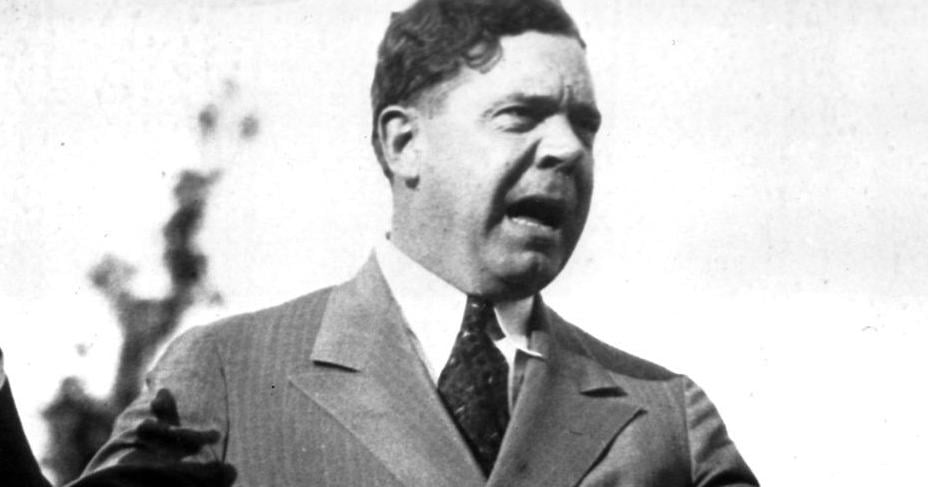
And with a strange subset of national Republicans led by Vice President JD Vance now citing infamous former Louisiana Gov. Huey Long as a positive role model, Democrats really should worry about a Louisiana Republican governor using the third-term option to amass a scary, Long-like power base.
Even those hardball political calculations, though, should matter less than the principles involved and what they mean for Louisiana’s people.
The entire design of American government, one rightly copied by all 50 states, is intended to disperse power, not centralize or concentrate it. The U.S. Constitution’s vaunted separation of some powers and blending of others is constructed, as founder James Madison wrote, so that “ambition must be made to counteract ambition.” And, he wrote, “In republican government, the legislative authority necessarily predominates.”
Yet over time, both nationally and in state after state, executive power has grown to a disturbing extent. No matter who writes the laws, the reality is that when one person controls the entire apparatus of how laws are implemented and enforced, the potential is greater for larger abuses by the one executive.
States differ, of course, in how much power, by law and custom, is concentrated in each state’s governor. Yet even in a notably “weak governor system” such as Alabama’s, in which the Legislature can override a governor’s veto by the same simple majority which passes a bill in the first place, legislators often cower before a governor’s dominion.
Louisiana’s system, by contrast, is considered not just to feature a “strong governor” system, but perhaps the nation’s strongest, due to our executive’s powerful role in crafting the budget, the massive authority over so many appointive positions, and the particularly impregnable line-item veto system.
For all those reasons, it always has been wrongheaded for Louisiana’s Constitution to allow a return to power of governors who already served two terms. The potential for fiefdom-building and corruption is immense.
This is especially true when legislators are themselves term-limited, as they are here. If state representatives, with their power already diffused 105 ways, must leave office after three terms, it is especially foolhardy to allow governors to keep coming back for as many two-term stints as they can secure.
From 1980-1984, Louisiana saw how the threat of a return to office of a former two-term governor can hobble a current administration. When the earnest, honest Republican Gov. Dave Treen tried to institute reforms, the specter of the wily former Gov. Edwin Edwards running a “shadow administration” blocked Treen repeatedly. It is dangerous to democracy for one person to be able to exercise such domination.
Again, witness Long, who essentially built his own private army to beat down his opponents.
Proposed Amendment 4 on the November ballot wisely would make such abusive situations less likely. Louisiana Democrats are wrong to oppose it.
Email Quin Hillyer at quin.hillyer@theadvocate.com
#### Contact Information
nola.com 840 St. Charles Avenue New Orleans, LA 70130 Phone: 504-529-0522
News Tips: nolanewstips@theadvocate.com
Other questions: subscriberservices@theadvocate.com